
Flat & commercial roofing crafted for Toronto roofs
Expert low‑slope and commercial roofing across Toronto neighbourhoods — email us for an assessment
Email Us for a Free EstimateFlat & commercial roofing in Toronto
Flat & commercial roofing requires systems that manage water, UV, thermal movement and heavy seasonal loads. In Toronto, low‑slope roofs on commercial buildings and some modern residential designs demand durable membranes, meticulous seam work and thoughtful drainage. At All Toronto Roofers we specify and install TPO, EPDM and modified bitumen systems as part of a full‑service approach that addresses detailing, substrate condition and long‑term performance. Our focus is on solutions that reduce ponding water and maintain seam integrity through Canadian seasons.
What this service covers
We cover roof replacement and full system installs, membrane recoating when appropriate, localized or full‑deck repairs, parapet and scupper detailing, new drainage, and roof‑top equipment flashings. Work includes new insulation layouts, vapour control where required, and tie‑ins to gutters or scuppers to control runoff. We also document the roof assembly and provide a written scope so building owners understand the layers and life expectancy of their system.
Signs you need work now versus what can wait
Active leaks, large ponding areas, membrane splitting at seams, or saturated insulation require prompt attention because they risk structural damage and interior finishes. Small seam failures, isolated blisters, or a degrading coating may be managed temporarily with repairs until a planned replacement makes sense financially. We help owners prioritise immediate repairs versus staged renewal to spread cost while controlling risk.
How acting early saves money
Addressing seam failure or poor drainage before insulation becomes waterlogged preserves the substrate and avoids full‑deck replacement — a major cost driver. Early intervention also limits interior damage to ceilings, electrical systems and tenant disruption in commercial properties. Proactive maintenance and periodic inspections extend membrane life and reduce the total lifecycle cost of roofing assets.
Why Toronto conditions matter
Toronto’s freeze–thaw cycles, heavy summer sun and periodic microburst storms put particular strain on low‑slope membranes and seams. Snow accumulation and rooftop equipment loads demand precise slope and drainage planning to prevent ponding. Local materials and installation techniques must account for these stresses to meet both building code expectations and practical longevity.
Request a no‑obligation roof assessment by email — we’ll review your options in writing
Email Us for a Free Estimate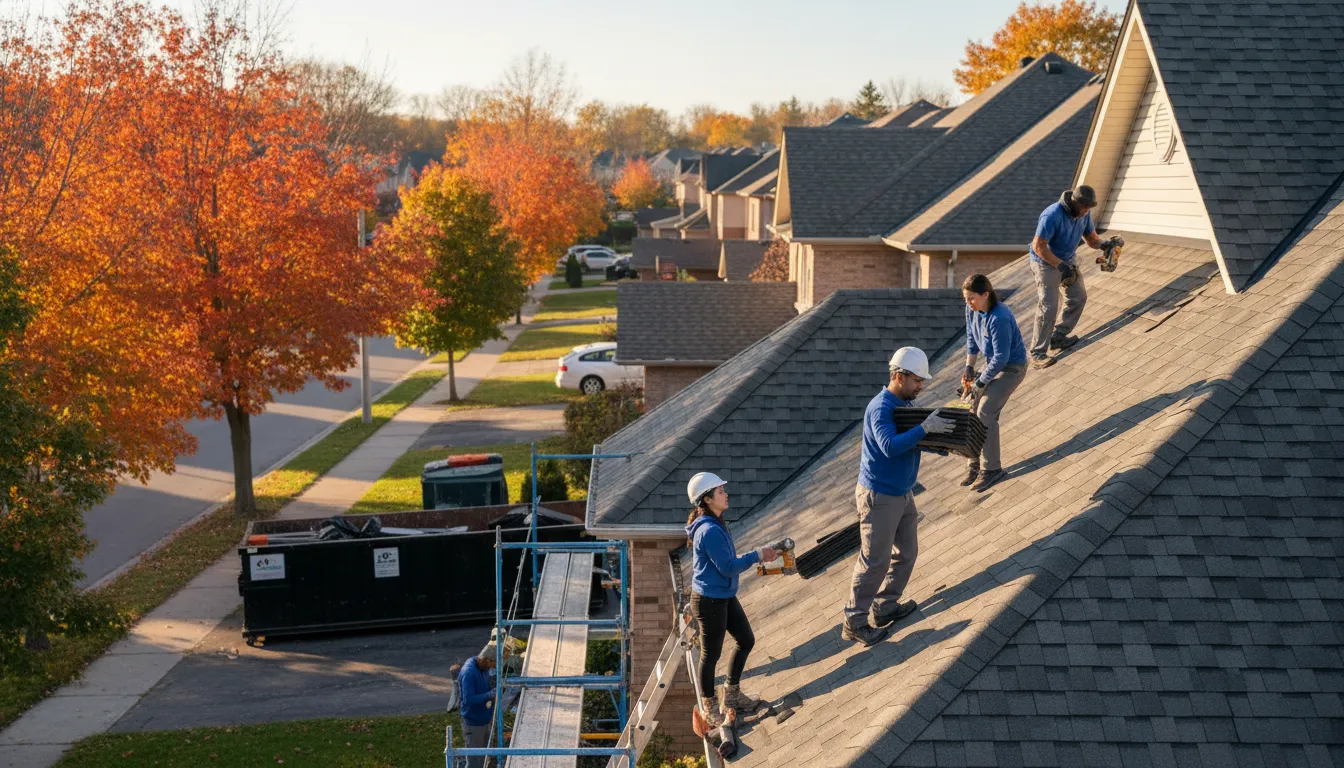
Flat & commercial roofing in Toronto
All Toronto Roofers specialises in Flat & commercial roofing across Toronto, working with property owners from King West storefronts to industrial units near the portlands. Low-slope roofing behaves differently than steep roofing: seams, drainage and membrane choice determine long-term performance. Our focus is on measurable durability—seam integrity, ponding-water mitigation and robust drainage details—so clients avoid repetitive repairs. Below we outline when a repair is reasonable, when replacement is the prudent investment, and how Toronto’s climate and building stock shape the right approach.
What this service covers
We install and restore low-slope roofing systems including TPO, EPDM and modified bitumen, and we detail flashings, scuppers, drains, insulation and edge metal. Work ranges from isolated patch repairs and flashing replacements to full membrane recover or tear-off with new tapered insulation and vapour control. For commercial properties we also coordinate roof-mounted equipment curbs and rooftop walkways. Each job is documented with a written scope and roof drawings when required.
Signs you need work now versus what can wait
Active leaks, saturated insulation, widely split seams or open flashings require prompt intervention to avoid interior damage and business disruption. Surface crazing, minor blisters or isolated ponding that drains within 48 hours may be managed with scheduled repairs and improved drainage. If the membrane is past its expected life or insulation is wet, replacement is the most economical long-term choice. Acting before insulation deterioration avoids structural rot and excessive interior repair costs.
Why early action saves money
Addressing seam failures, blocked scuppers, and failing flashings early prevents water ingress that soaks insulation and deck assemblies. Once insulation is wet, drying is slow and the envelope becomes a recurring maintenance burden; full removal and replacement are often then required. Proper drainage upgrades — tapered insulation and additional scuppers or internal drains — restore service life and reduce the frequency of emergency patching. A thoughtful replacement with durable membranes avoids the cost of repeated short-term fixes.
Why local conditions matter in Toronto
Toronto’s freeze-thaw cycles, heavy rains in late spring and summer thunderstorms and lake-effect snow demand roofing assemblies that manage moisture and thermal movement. The city’s diverse building stock—from mid-century low-rise commercial blocks in Scarborough to new mixed-use developments in Liberty Village—means we tailor membrane selection, insulation thickness and termination details to the building type. All Toronto Roofers factors local code practices, common roof penetrations and typical rooftop mechanical loads when specifying work.
Why Choose All Toronto Roofers for Flat & commercial roofing
We approach each flat and commercial roofing project in Toronto as a crafted building assembly where finishes, drainage and detailing matter for decades. Our process centres on clear written scopes, local knowledge and a craftsman’s attention to junctions and seams.
Transparent written quotes
Every project begins with a written scope and itemised estimate that explains material choices, insulation R-values and site conditions. This ensures owners in Toronto and nearby cities see exactly what they’re paying for.
No hidden fees
We price for the full work scope, including tear-off disposal, roofing underlayments, and scupper or drain upgrades when needed. That clarity helps property managers budget accurately without surprises.
Cleanup and site protection
We protect landscaping, storefronts and pedestrian routes with boards, safety barriers and magnetic sweeper passes at job completion. A clean jobsite is part of our standard; we leave Toronto properties ready for occupation.
Local Toronto crew
Our teams understand Toronto permits, common roof details and typical rooftop equipment layouts seen across neighbourhoods like Yorkville and the Beaches. Local crews mean faster responses and practical sequencing with minimal disruption.
Workmanship guarantee
We document repairs and replacements with a final walkthrough and a written workmanship commitment covering our installation practices. That paperwork supports future maintenance and insurance discussions.
Clear communication
Project managers provide written schedules and email updates so building owners and facilities staff always know status and next steps. Communication reduces downtime and coordinates deliveries with tenancy and municipal inspections.
Signs You Need Flat & commercial roofing in Toronto
Recognising visible symptoms early prevents interior damage and lengthens a roof’s service life. Here are common signs we see across Toronto and what they usually indicate beneath the membrane.
Persistent interior leaks after rain
Water staining on ceilings or walls points to through-roof leakage, often from failed flashings, open seams or punctures in the membrane. If left unchecked, moisture will saturate insulation and damage deck substrates.
Large areas of ponding water
Pools of standing water that remain for more than 48 hours stress membranes and accelerate seam failures, especially on low-slope roofs. Chronic ponding often means inadequate slope or missing tapered insulation and should be corrected rather than repeatedly patched.
Split or open seams
Visible seam separation or adhesive failure is a direct path for water infiltration; seams are a roof’s most vulnerable line. Proper seam repair or seam reinforcement with compatible mating membranes restores integrity.
Blistering or bubbling of the membrane
Localized blisters form when moisture is trapped under the membrane or when vapour drive causes delamination from insulation. Small blisters may be monitored, but widespread blistering usually requires partial or full replacement.
Compromised roof-edge flashing
Rusted or pulled metal edge flashings and loose termination bars let wind-driven rain force water under the membrane. Replacing metalwork and reseating terminations secures the roof edge against uplift and infiltration.
Saturated or heavy-feeling roof deck
A roof that feels unusually heavy or shows signs of sagging has likely accumulated wet insulation or rot in the deck. This condition typically requires removal of the membrane and replacement of insulation and possibly roof deck materials.
Frequent patch repairs
If repairs recur in the same area, the underlying issue—poor detailing, inadequate drainage, or inappropriate membrane choice—is unresolved. At that point, a targeted replacement with corrected details is often the better investment.
How much does Flat & commercial roofing cost in Toronto?
How much does Flat & commercial roofing cost in Toronto?
Cost depends on several tangible factors: roof area and complexity, the membrane system you select (TPO, EPDM, or modified bitumen), insulation needs and whether a single-ply recover or full tear-off is required. Access and rooftop equipment complexity (curbs, ducts, skylights) affect labour and crane or hoist requirements, and unforeseen conditions—like wet insulation or deck rot discovered during tear-off—raise scope and cost. We always provide a written itemised quote after a site assessment so owners understand material choices, insulation R-values and removal or disposal charges. Email us to request a no-obligation inspection and a tailored written estimate.
Do I need repair now or can this wait?
Assess urgency by looking for active leaks, interior damage and saturated insulation; these require prompt action to avoid escalating costs. Cosmetic damage or minor surface wear may be scheduled for a planned repair season when crews can address drainage improvements and flashing work without emergency premiums.
Is my budget aligned with long-term value?
Ask whether a short-term patch will extend service life meaningfully or simply delay an inevitable replacement—sometimes a modestly larger initial investment in a robust membrane and tapered insulation saves money over three to five years. If budget is tight, discuss prioritising critical repairs and planning staged replacements that address drainage and termination details first.
When is a repair better than replacement?
Repairs are suitable for isolated punctures, limited seam separation, or single-flashing failures when insulation remains dry and the membrane has useful life left. Replacement is safer when widespread seam deterioration, saturated insulation or multiple failing details are present; replacing the assembly reduces downtime and recurring repair costs.
Which membrane should I choose?
TPO offers heat-welded seams and bright finishes for reflectivity; EPDM is resilient and forgiving with adhesive or mechanically-fastened seams; modified bitumen gives a multi-layer build with granule or torch-applied options. Material selection should consider rooftop traffic, heat loads, and expected lifespan—discuss trade-offs with your estimator to match performance with budget.
How will work affect building operations and access?
Consider deliveries, rooftop mechanical shutdowns and tenant access; schedule work during off-peak periods when possible and plan staging areas for materials to avoid blocking loading docks. For multi-tenant buildings in Toronto, advanced notice by email to tenants and coordination of roof-mounted equipment shut-downs reduces disruption.
Do I need permits and code compliance?
Many flat and commercial roofing projects require local permits, particularly for full removals, insulation upgrades and significant rooftop work that alters building envelope performance. We make general recommendations in the quote and advise when an owner should seek a permit; smaller repairs often proceed without permits but must still meet local code and fire-stop detailing.
How much does Flat & commercial roofing cost in Toronto?
Pricing depends on measurable factors: roof area and complexity, membrane choice (TPO, EPDM, modified bitumen), insulation requirements, and whether a tear-off is needed. Access, rooftop equipment and the discovery of wet insulation or deck damage during work also change final scope. We perform an on-site assessment and supply an itemised written quote by email explaining which costs are for materials, labour and permits.
How long will the work take?
Simple repairs and localised flashings can be completed in a day or two, while full replacements on larger commercial roofs commonly require several days to a few weeks depending on size and weather. Scheduling also depends on permit timelines, material lead times and crane or lift availability for access. We provide a realistic timeline in the written scope to help building managers coordinate operations.
Which materials should I choose: TPO, EPDM or modified bitumen?
TPO offers welded seams and good solar reflectivity for heat reduction; EPDM is flexible and performs well in extreme cold with proven longevity; modified bitumen gives a multi-layer built-up feel with strong puncture resistance. Material choice depends on roof use, expected foot traffic, desired maintenance profile and budget—our estimator will recommend the appropriate membrane after inspection.
Do I need permits or inspections for roof work in Toronto?
Permit needs vary by project scope: full assemblies, structural changes, significant insulation upgrades or altered drainage often require permits and municipal inspections. Small repairs frequently do not, but all work must meet code and fire-stop detailing. We note permit requirements in our proposal and coordinate with designers or inspectors when needed.
What kind of warranty or guarantee do you provide?
We document workmanship standards and provide a workmanship commitment covering installation practice; material manufacturers may offer separate product warranties depending on the chosen membrane. We explain which parts of the job are covered by our workmanship guarantee and which are covered by manufacturer terms, and we provide all documentation by email at project close.
How should I prepare my building for roof work?
Notify tenants and building staff by email about start dates and expected access restrictions, and secure rooftop items if possible; we will coordinate any required shutdowns for rooftop mechanicals. Clear staging areas for materials and ensure safe access points to the roof for crews and equipment.
Why do quotes differ between contractors?
Quotes vary because contractors make different assumptions about membrane life, insulation condition, necessary drain upgrades, and the level of finish at edges and penetrations. Some estimates prioritise lowest immediate cost with limited scope, while others include corrective drainage work, higher insulation R-values or premium termination details that reduce long-term maintenance. Our written proposal explains the chosen approach and its expected lifecycle value.
Our Flat & commercial roofing Process in Toronto
We deliver methodical, documented work for flat and commercial roofing projects across Toronto, from initial assessment through final documentation. Each stage emphasises detail, protection and communication.
- 1
Site assessment and infrared/dryness check
We inspect seams, flashings, drains, and test for saturated insulation where appropriate, using moisture meters or infrared scanning to confirm conditions. The assessment identifies required repairs versus replacement and informs a detailed scope.
- 2
Written scope and estimate
Following assessment we produce an itemised written proposal that lists membrane options, insulation R-values, drainage and termination upgrades, and any permitting needs. The document clarifies exclusions and a recommended maintenance plan.
- 3
Scheduling and logistics
We coordinate a start date by email, arranging material deliveries, crane or lift access and any required municipal inspections. Planning includes protection of sidewalks, storefronts and neighbouring properties, and sequencing to minimise tenant disruption.
- 4
Work execution and site protection
During installation we follow prescribed attachment methods for TPO welds, EPDM adhesives or torch-applied modified bitumen, and install tapered insulation or new drains where needed. Crews protect rooftop equipment, secure loose items, and perform daily cleanup with magnetic sweeping to remove metal debris.
- 5
Final walkthrough and documentation
Upon completion we conduct a walkthrough with the owner or property manager, document membrane cut sheets and installation notes, and deliver an invoice and workmanship paperwork by email. We outline recommended interval inspections and seasonal maintenance to preserve performance.
Professional Flat & commercial roofing Built for Toronto Conditions
Toronto’s climate and building fabric demand roofing solutions that cope with freeze-thaw cycles, heavy summer rain and periodic lake-effect snow. All Toronto Roofers designs and installs assemblies that address moisture control, thermal movement and durable drainage so roofs perform predictably across seasons. Our local experience—from downtown commercial corridors to industrial zones near Mississauga and Markham—guides membrane choice and detailing. Below are the local technical considerations that shape our recommendations.
Ontario climate stresses
Freeze-thaw cycling and seasonal temperature swings cause membrane contraction and expansion, stressing seams and flashings over time. Heavy rainfall events and spring melt increase the need for reliable scuppers and functioning internal drains; we typically upgrade drainage paths and recommend slope correction when ponding is evident.
Toronto housing-stock and commercial types
Low-rise retail, industrial warehouses and multi-unit residential roofs each demand different insulation and access strategies—walkways, curb protection and mechanical equipment curbs vary by use. Older commercial buildings in Toronto may have single-layer membranes with limited insulation, so we evaluate deck conditions and propose appropriate insulation build-ups to meet modern performance expectations.
Permits, code and municipal practice
Toronto’s permit practices and non-structural code expectations influence what assemblies require drawings or engineering sign-off, especially when changing insulation thickness or altering roof drainage. We work with architects, engineers and municipal inspectors as needed and include permit guidance in our written scope.
Craftsmanship and finishing standards
Fine workmanship concentrates on corners, drains and terminations where most failures begin; we use metal terminations, reinforced membrane in high-traffic zones and sealed penetrations to maintain long-term integrity. Documentation of membrane type, fastener patterns and adhesive/welding records accompanies each job to support future maintenance and warranty needs.
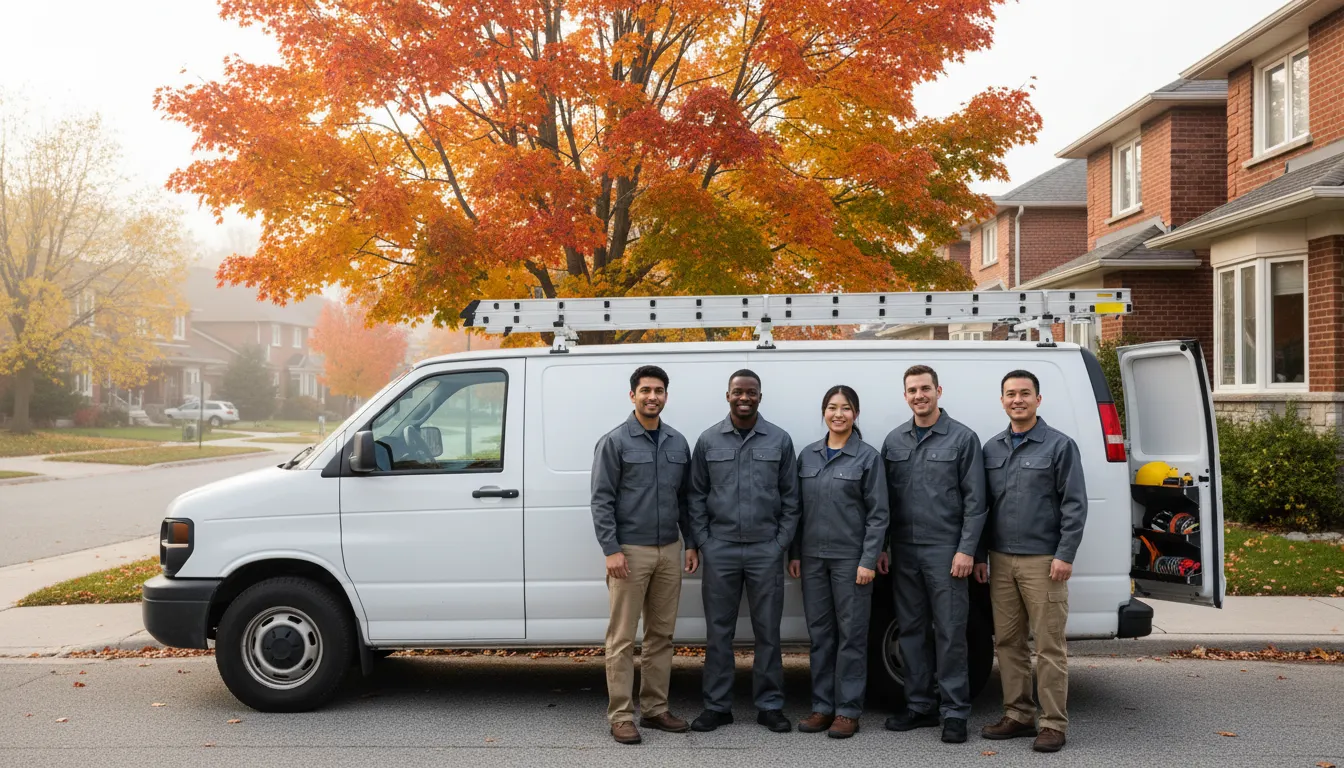
Weather is hard on your roof — email us for a same-day inspection.
Fall roofing conditions in Toronto, ON
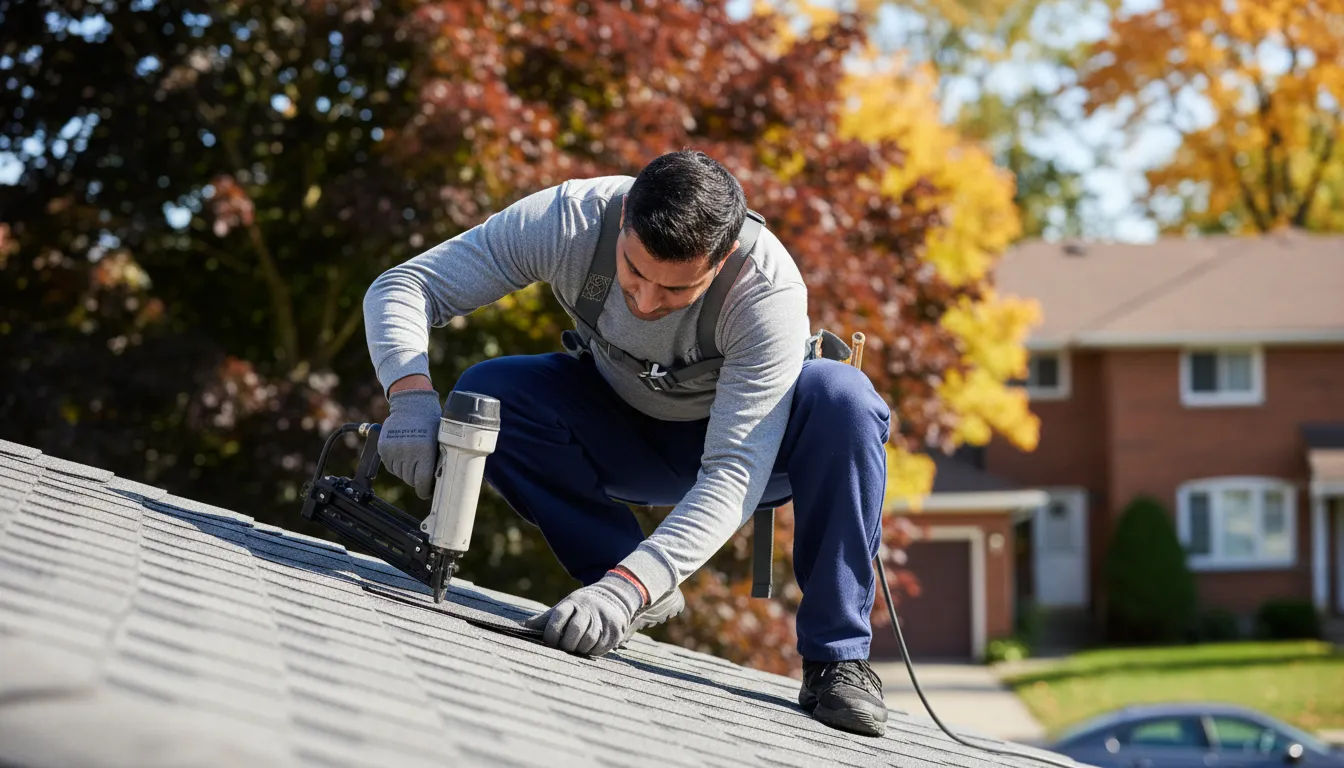
Fall is the critical prep window around Toronto, ON: clear gutters, reseal flashing, and fix loose shingles before freeze-thaw and snow load arrive.
Proudly Serving Toronto, ON
Local, on-time service throughout Toronto and the surrounding area.