
Storm & hail damage repair that protects your home
Comprehensive inspections and repairs for Toronto roofs, gutters and siding
Email Us for a Free EstimateThe problem storm and hail create for Toronto roofs
Hail impacts bruise shingle granules, polymer membranes and metal panels, reducing water-shedding capability while wind can lift shingles and loosen nails or clips. Left unrepaired, these failures allow water to penetrate underlayment, saturate sheathing, and cause interior leaks, rot and mould. Fast-moving storms can also bend or detach eavestroughs and downspouts, creating poor drainage that accelerates fascia and soffit decay. Many of these failure mechanisms are hidden from ground-level views, so homeowners discover the consequences only after secondary damage appears.
How All Toronto Roofers fixes storm & hail damage in Toronto
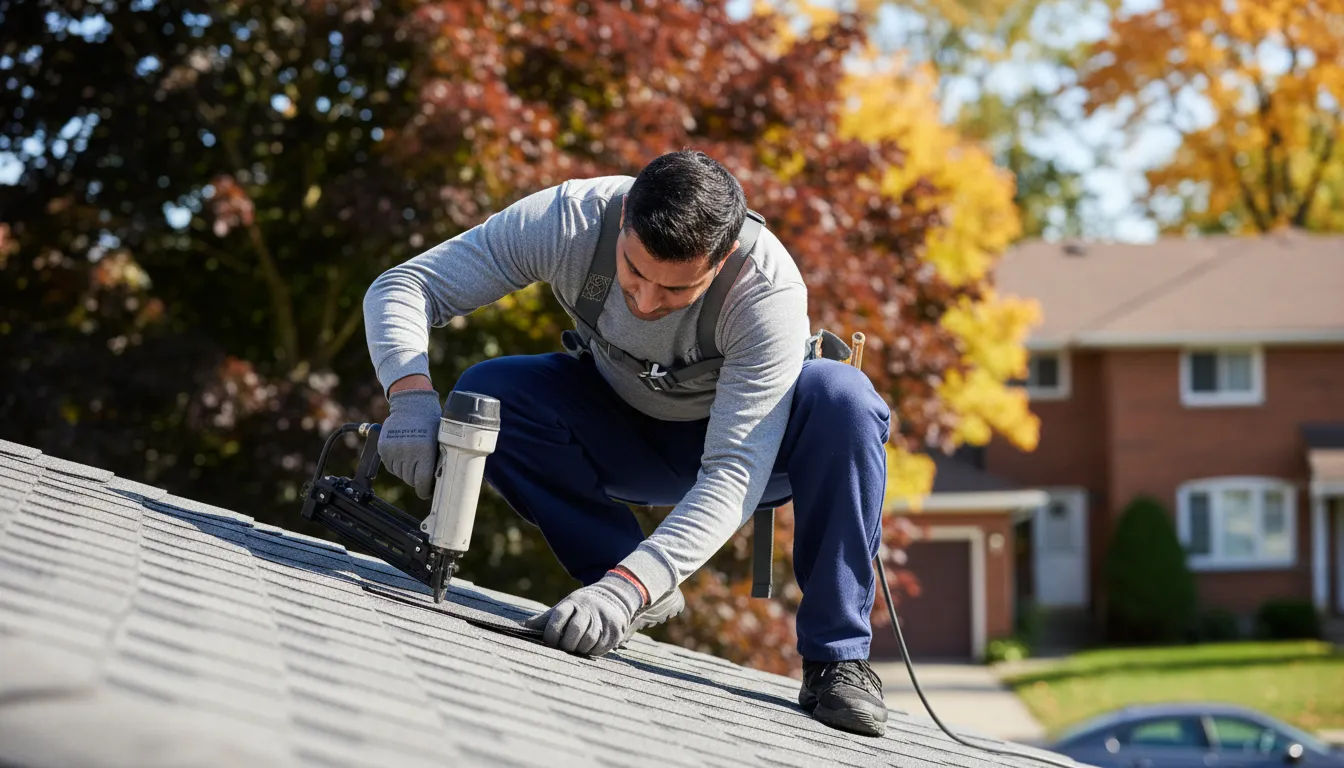
All Toronto Roofers begins with a methodical roof inspection using binoculars and, where safe, on-roof examination to check shingles, underlayment exposure, flashing integrity and metal component dents. We document findings with photos and a written scope formatted for insurers, noting hail pocks, bruises, displaced shingles and compromised flashing. Repairs use proven materials—architectural asphalt shingles, synthetic underlayment, ice-and-water shield, metal flashing and aluminum eavestroughs—with attention to fastening patterns, nail length and corrosion-resistant fasteners suitable for Toronto’s climate. For complex issues we replace sections of sheathing, correct ventilation or install new drip edge and step flashing to restore weatherproofing and long-term performance.
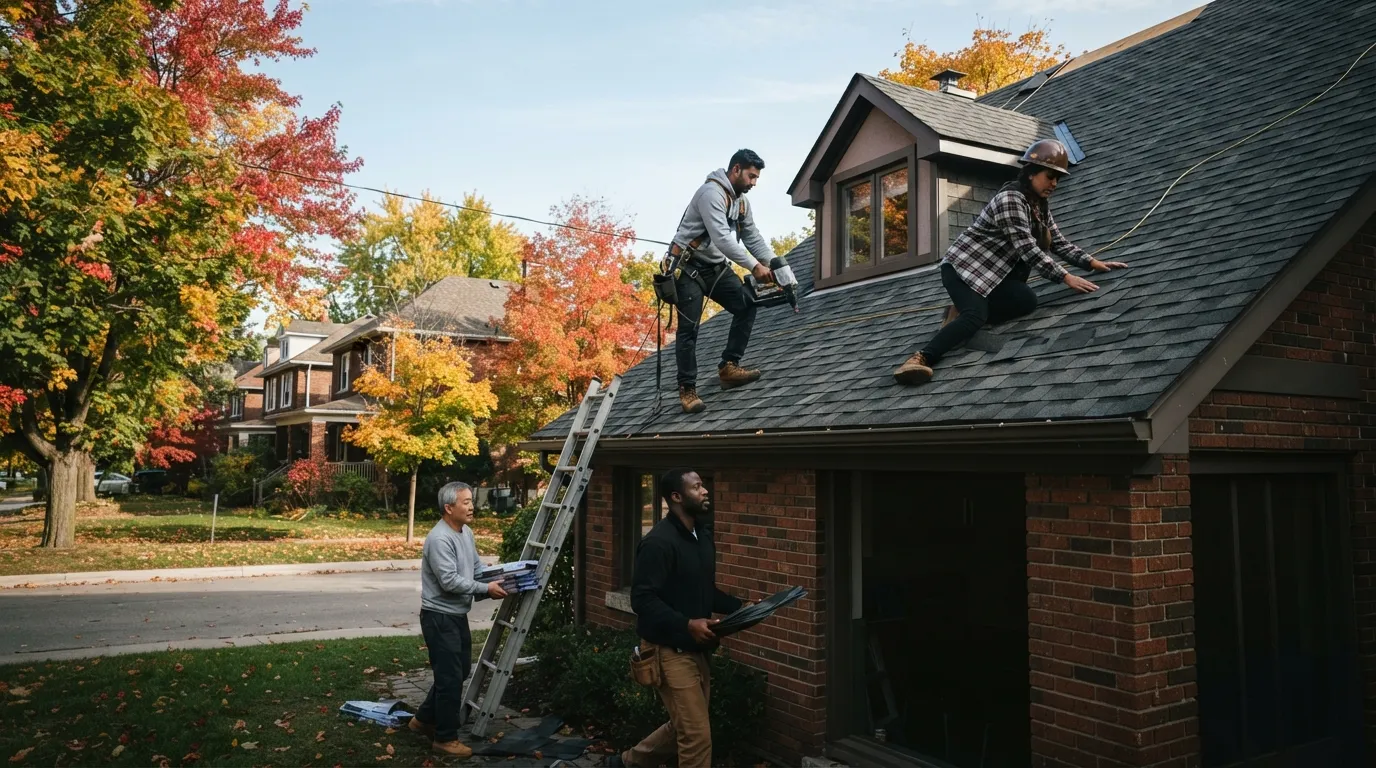
Request a no-obligation storm inspection and written assessment for Toronto homes
Email Us for a Free EstimateWhat to Consider Before Booking Storm & hail damage repair
Does my budget match the likely scope?
Estimate whether you need a spot repair, partial re-cover, or full replacement—each option differs widely in cost and longevity. If the damage is confined to a few shingles or a short section, a spot repair is often the right, economical choice; for widespread granule loss or multiple leaks, replacement provides better long-term value. Align your budget with the expected lifespan of the work so you avoid repeating repairs within a few winters. Consider whether insurance will cover part of the cost and what your deductible will mean for choices.
Is timing important given Toronto’s seasons?
Yes—Toronto’s spring and summer bring hail and wind, while fall and winter introduce freeze-thaw cycles that can worsen unseen damage. Scheduling an inspection soon after a storm both preserves evidence for insurance and allows repairs before cold weather complicates work. Some repairs, like replacing underlayment and shingles, are best completed in dry conditions to protect decking and insulation. If work must wait, we recommend protective tarping and monitored interim fixes.
Repair versus full replacement—what’s right?
Choose repair for isolated failures where decking and ventilation remain sound; choose full replacement when multiple areas show wear, there are visible leaks, or roof age and layered coverings reduce remaining life. A full replacement allows correction of systemic issues—poor ventilation, underlayment failures or deteriorated flashing—that spot repairs cannot address. If the home is being sold or has long-term plans, replacement often adds resale value and reduces future maintenance. For tight budgets, documented spot repairs bought with warranty terms can be appropriate.
Which materials should I pick?
Materials range from 3-tab asphalt shingles to heavier architectural shingles, metal panels, and synthetic underlayments; each has trade-offs in cost, aesthetic and service life. Architectural shingles offer better wind resistance and longer life than 3-tab, while metal is durable and low-maintenance but more costly to match visually. Choose underlayment and ice-and-water shield appropriate for Toronto’s freeze-thaw cycles and for areas with frequent ice dams. Consider colour and finish for curb appeal in Toronto’s diverse neighbourhoods.
How disruptive will the work be to my household?
Roof work is noisy and involves scaffolding, ladders and material staging; expect daytime work and some access restrictions near the house perimeter. A spot repair typically takes less time and causes less disruption than a full tear-off, which can last several days depending on roof size and complexity. We plan dust and shingle clean-up, use magnetic sweepers for nails and protect landscaping and pathways. If interior access is required for ceiling repairs, coordinate those efforts to limit disruption.
Are permits or codes a concern in Toronto?
Most small repairs do not require permits, but partial or full replacements can trigger municipal requirements around ventilation, insulation and roof structure—especially in older Toronto homes. If structural repair or replacement of sheathing is needed, we advise checking Toronto building department guidelines and obtaining permits when required. Proper permitting protects you and ensures work meets local code for weatherproofing and fire separation. When unsure, request that we review permit needs as part of the written scope.
Our Storm & hail damage repair Process in Toronto
We follow a clear, documented process designed for Toronto homes so you understand condition, cost and timing before any work starts.
- 1
1. Inspection and photographic assessment
We begin with a thorough exterior inspection using binoculars, on-roof checks where safe, and close-up photos of hail pocks, lifted shingles and flashing. Photographs show the problem areas and the surrounding roof condition so insurers and homeowners see the full context. If interior stains are present, we document ceiling and attic conditions as well.
- 2
2. Written scope and insurance documentation
All Toronto Roofers produces a detailed written scope describing recommended repairs, materials, and visible causes with supporting photos formatted for insurance submissions. The scope separates cosmetic issues from functional failures and offers repair versus replacement options. This step clarifies expectations and reduces surprises during the work.
- 3
3. Scheduling and materials selection
Once you approve the written quote, we schedule work around Toronto weather and material availability, confirming shingle profile, underlayment type and metal finishes. We coordinate any permit review and advise on access or staging needs for your property. You receive a clear start date and an outline of daily working hours.
- 4
4. The work: protection, repair, and cleanup
On-site we protect landscaping, hard surfaces and exterior finishes, and perform repairs using corrosion-resistant fasteners, proper flashing techniques and industry-standard underlayment. For tear-offs we remove debris and perform a thorough magnetic sweep to collect nails and fragments. We leave the site broom-clean and restore eavestrough alignments and downspouts to proper drainage pitches.
- 5
5. Final walkthrough and documentation
After completion we conduct a walkthrough with you to review repairs, explain maintenance needs and provide the final documentation, including photos and the installation warranty terms. We furnish the written invoice and insurance-ready report so you can submit a claim if applicable. Follow-up inspections are available to ensure performance through Toronto’s seasonal cycles.
Why Choose All Toronto Roofers for Storm & hail damage repair
All Toronto Roofers brings a boutique, craft-focused approach to storm & hail damage repair in Toronto, pairing careful material selection with clear written scopes and respectful project execution.
Transparent written quotes
Every inspection culminates in a written scope that lists repairs, materials, and the rationale behind each recommendation. That written record is useful for homeowners and for insurance adjusters when filing or defending a claim.
No hidden fees
Our proposals break out labour, materials, disposal and any necessary permit work so you won’t see surprise line items. If a condition discovered during work changes the scope, we present a clear change order by email before proceeding.
Dedicated cleanup commitment
We use magnetic sweepers, magnetic mats and hand-inspect the yard and eavestroughs after every roof project to recover loose nails and debris. Property protection — tarps over landscaping and protected walkways — is standard on every job in Toronto.
Local Toronto crews
Our crews live and work within Toronto and neighbouring Mississauga and Vaughan, so we understand local housing stock, microclimates, and permit practices. Using local teams shortens response time and keeps communication direct and neighbourhood-aware.
Workmanship guarantee
We stand behind our repairs with a workmanship commitment that covers installation errors and workmanship-related defects. This is documented in writing with each proposal so you know what is covered and for how long.
Clear email-first communication
All contact is managed by email to give you a written trail of agreements, photos, and schedules that you can file with insurance. We respond promptly and provide the same detailed communication whether you live in the Beaches or Etobicoke.
Signs You Need Storm & hail damage repair in Toronto
Hail and wind do characteristic damage that can be subtle but consequential. These signs help you recognise when an inspection or repair is warranted and what might be happening beneath the roof surface.
Missing or lifted shingles
Shingles that are curled, cracked or physically missing indicate wind uplift or point impacts that have compromised fasteners. Beneath the visible shingle damage, the underlayment or roof decking may be exposed to water and begin to deteriorate if not attended to.
Granules in gutters
Excessive granule accumulation in eavestroughs suggests hail bruising or advanced shingle wear; granules protect the shingle mat from UV and abrasion. Loss of granules reduces the shingle’s service life and often signals accelerated ageing that can lead to leaks.
Dents on metal components
Dents on metal vent caps, flashings, or downspouts are classic hail impacts that weaken metal profiles and water-shedding geometry. Even when paint appears intact, small deformations create creases and seams that can corrode or leak over time.
Blistering or wet insulation in attic
Attic condensation, wet insulation, or water stains on sheathing are signs that roof integrity has failed and water is entering the envelope. This often means underlayment or decking has been compromised and requires more than a surface repair.
Loose or separated flashing
Flashing around chimneys, skylights and dormers that is bent, torn or separated from substrate indicates wind or impact forces. Underneath, the exposed transition points can admit water into wall assemblies and lead to rot around framing members.
Soft or sagging roof deck
A roof deck that feels spongy or visibly sags suggests prolonged water exposure and possible structural deterioration. Repair in this case usually includes plywood or OSB replacement, new underlayment, and attention to ventilation to prevent recurrence.
Cracked or split asphalt shingles
Shingles with surface cracking or split tabs often result from hail impacts combined with cold snaps and temperature cycling. Cracked shingles no longer shed water effectively and should be replaced to avoid downstream leaks.
Clogged or displaced eavestroughs
Eavestroughs knocked out of alignment by wind will not drain properly and can backwater under roof edges. Persistent standing water accelerates fascia, soffit and trim rot and increases hydrostatic pressure that can force water under shingles.
Professional Storm & hail damage repair Built for Toronto Conditions
Toronto’s combination of spring hail, urban wind tunnels and winter freezes shapes both the types of damage we see and the repair choices we recommend. All Toronto Roofers adapts materials and methods to local housing stock — from century homes in Cabbagetown to modern townhouses in Liberty Village — ensuring repairs fit the roof’s construction and the street’s character.
Ontario climate stresses
Freeze-thaw cycles cause differential movement in roof assemblies, making poorly fastened shingles more susceptible to splitting after hail impacts. In Toronto, spring and early summer hail are frequent enough that we design repairs with UV-resistant shingle surfacing and ice-melt strategies at eaves to reduce seasonal stress.
Local housing-stock considerations
Many Toronto homes have a mix of pitched and low-slope roof elements, multiple penetrations and older flashing details that require bespoke solutions. For heritage neighbourhoods we recommend matching shingle profiles or using compatible materials like cedar shakes where permitted, balancing aesthetic and functional concerns.
Permits and municipal context
Toronto’s municipal process may require inspections or notifications for larger roof replacements or structural repairs, and nearby cities such as Mississauga or Vaughan each have slightly different requirements. We advise clients on likely permit needs and include documentation to streamline approvals and inspections where required.
Workmanship and lasting finishes
High-quality repairs use lasting components: polymer-modified self-adhering underlayment at eaves, corrosion-resistant flashings, and high-wind fastening patterns for shingles on exposed slopes. Finishes are selected for long-term colour retention and granule adhesion, so your repaired roof looks cohesive and performs longer across Toronto’s climate cycles.
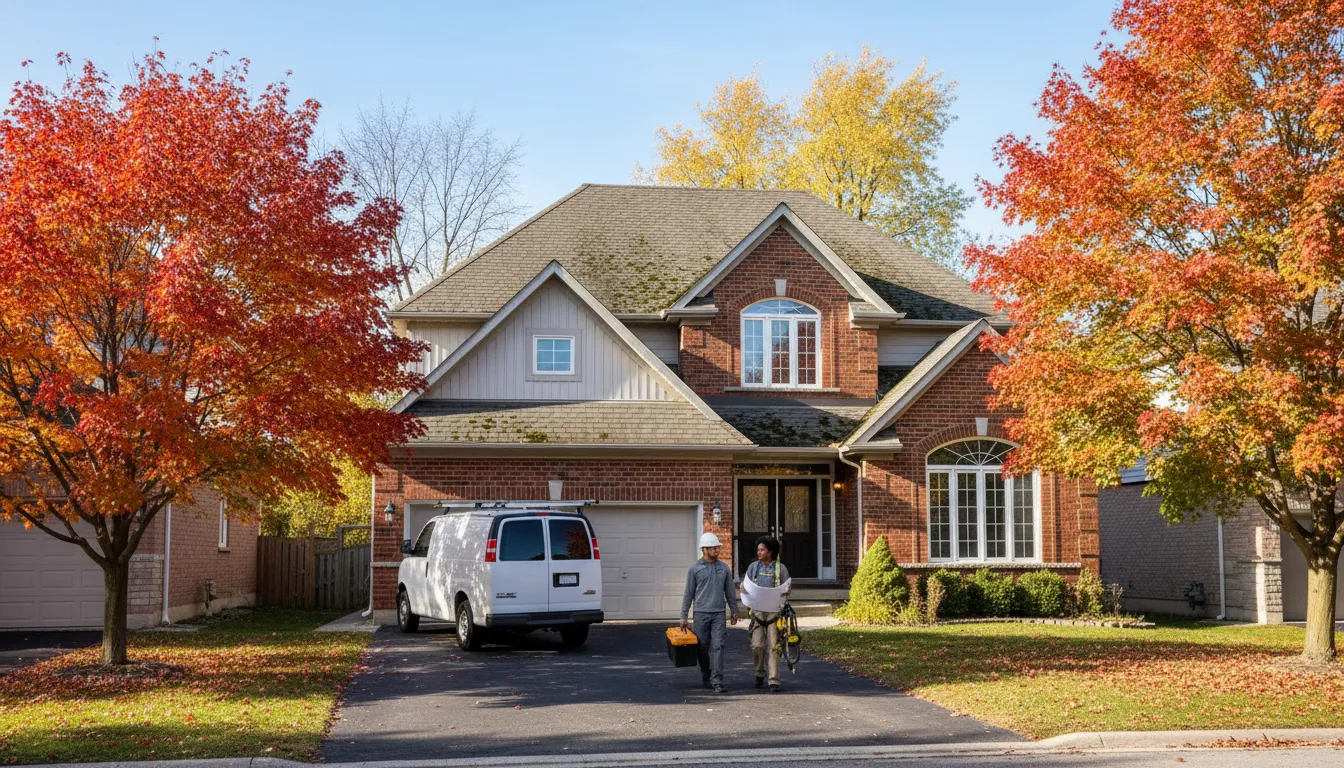
Weather is hard on your roof — email us for a same-day inspection.
Fall roofing conditions in Toronto, ON
Fall is the critical prep window around Toronto, ON: clear gutters, reseal flashing, and fix loose shingles before freeze-thaw and snow load arrive.
Proudly Serving Toronto, ON
Local, on-time service throughout Toronto and the surrounding area.