
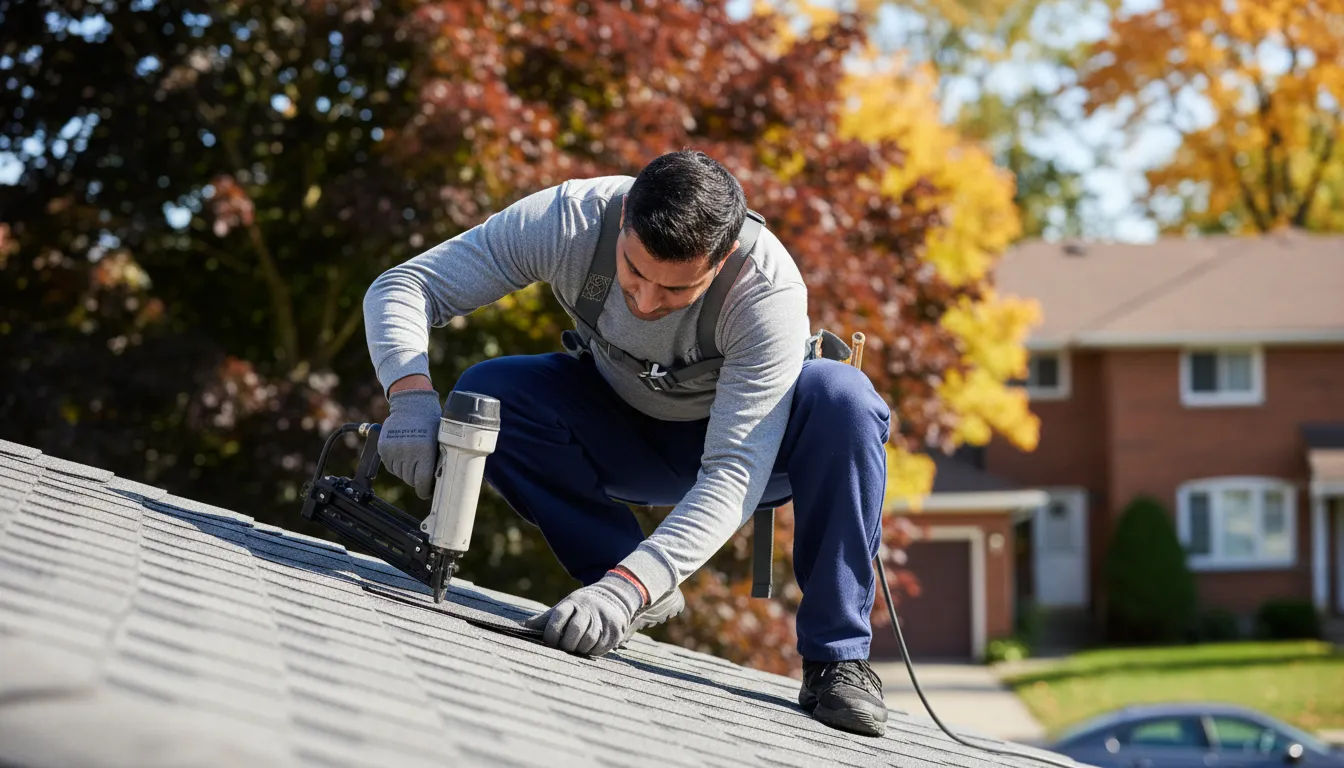
Roof replacement with refined craftsmanship
Comprehensive Roof replacement services across Toronto, tailored to local weather and homes
Email Us for a Free EstimateRoof replacement in Toronto
Roof replacement in Toronto is a significant investment in the lifespan and performance of your home. All Toronto Roofers performs full tear-off and re-roof installations across the city, replacing failing assemblies with attention to deck condition, underlayments and ventilation. We work with asphalt architectural shingles, metal roofing and clay or concrete tile systems, and we always inspect and address decking, ice-and-water protection, and ridge and soffit ventilation.
What this service covers
A complete Roof replacement from All Toronto Roofers includes full tear-off to the roof deck, replacement of damaged sheathing, installation of synthetic underlayment and ice-and-water shield in valleys and eaves, new flashing and proper ridge and soffit ventilation. We finish with your chosen surface — architectural asphalt shingles, standing-seam or corrugated metal, or tile — and detailed perimeter flashings so the roof performs for decades.
Signs you need replacement now vs a repair
If you see widespread shingle granule loss, curling across multiple slopes, persistent leaks, or soft/rotten decking, replacement is typically the right choice. Small isolated issues such as a few missing shingles or a single flashing failure can often be repaired; a full assessment determines whether a targeted repair or a full Roof replacement is necessary.
Why acting early saves money
Replacing a compromised roof before leaks spread prevents secondary damage to insulation, ceilings and structural decking — all costly surprises. Addressing ventilation and underlayment issues at replacement avoids repeat visits and prolongs the new roof’s life, delivering better long-term value than repeated spot repairs.
Why Toronto's conditions matter
Toronto’s seasonal swing — from freezing winters with ice formation to warm, humid summers — stresses roofing materials differently than milder climates. Ice-and-water shield at eaves, synthetic underlayment rated for freeze-thaw cycles, and continuous intake and exhaust ventilation are essential to prevent ice dams, moisture trapping and premature deterioration.
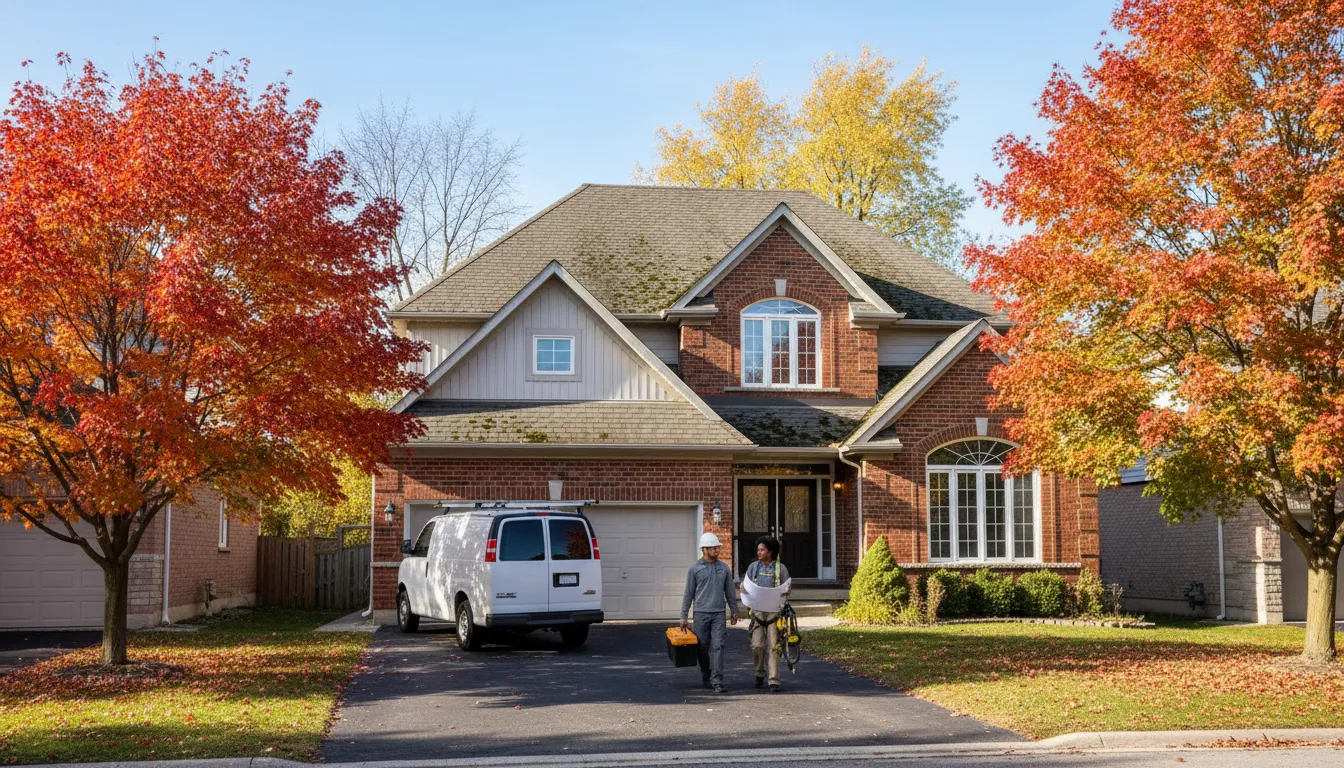
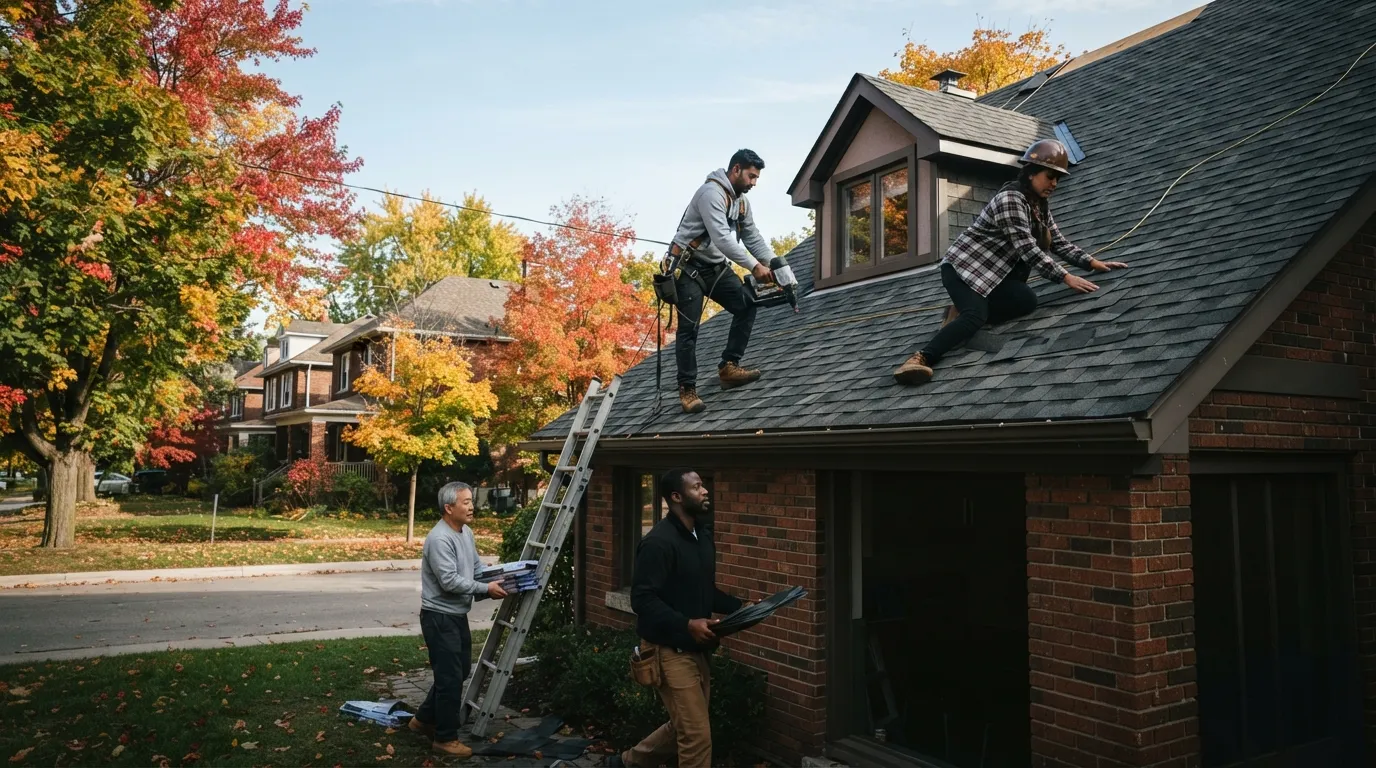
Request a no-obligation roof assessment by email — we’ll review options and scope in writing
Email Us for a Free EstimateWhat to Consider Before Booking Roof replacement
Does my budget fit a full Roof replacement?
Consider whether recurring repairs are already costing more than a replacement; if you’re patching the same leaks each year, replacement may be more economical. A clear written scope from All Toronto Roofers will separate essential structural and weatherproofing work from optional finish upgrades so you can prioritise spending.
When is the right season for Roof replacement in Toronto?
Toronto’s spring through fall months offer the best weather window for tear-off roofing to manage material handling and adhesives, but emergency replacements happen year-round with proper precautions. Snow and prolonged freezing conditions make full tear-off harder, and crews will discuss timing and temporary protections if work must proceed in shoulder seasons.
Repair versus full replacement — which is right?
If damage is localised — a single valley, a limited area with missing shingles or a flashing failure — a repair is often appropriate. If there is broad shingle deterioration, multiple leak locations, or rotten decking shown on inspection, a full Roof replacement is the safer long-term choice.
Which materials suit my Toronto home?
Match material choice to roof pitch, neighbourhood character and budget: architectural shingles for classic residential streets, metal for steep slopes and modern aesthetics, and tile for select high-end profiles. We’ll review exposure, attic ventilation, and permit implications to recommend the best system for your home.
How disruptive will the work be to my household?
Expect noise and daily crew activity during a tear-off and re-roof; we protect landscaping, use edge protection and gutter screens, and manage debris with roll-off containers and magnetic sweepers. We outline a site protection plan and clean-up schedule in the written proposal so you can plan around the work.
Do I need permits and inspections in Toronto?
Most full Roof replacement jobs require a building permit and may need inspection of decking and ventilation work; All Toronto Roofers prepares documentation for permit submissions and coordinates with inspectors. Simple repairs sometimes do not need permits, but we’ll confirm the local requirement during the assessment so there are no surprises.
Our Roof replacement Process in Toronto
We follow a clear, documented process so homeowners in Toronto understand scope, timing and protections. Below are the typical steps for a full tear-off Roof replacement.
- 1
Assessment and roof inspection
We perform a thorough visual and physical inspection of slopes, flashings, valleys, eaves and attic spaces to assess decking condition and ventilation. This includes lifting select shingles to check sheathing and fastener types and photographing areas of concern for your report.
- 2
Written scope and transparent quote
You receive a detailed, written proposal that separates mandatory scope (deck repair, ice-and-water, underlayment, ventilation) from optional finishes or upgrades. The quote explains material choices, estimated schedule and trade-offs so you can make an informed decision without hidden fees.
- 3
Scheduling and preparation
Once you accept the proposal, we schedule the work and outline site protections for landscaping, driveways and eavestroughs; we also arrange permit submissions if required. We email a project confirmation with the anticipated start date, duration and daily arrival times, since we do all scheduling and communications by email.
- 4
Tear-off, deck repair and installation
On installation day we perform a full tear-off, inspect and replace any rotten decking with approved sheathing, install ice-and-water shield at eaves and valleys, lay continuous synthetic underlayment, flash penetrations properly and install your new roofing material. Crews use tarpaulins, plywood walkways and magnetic sweepers to protect surfaces and collect nails and debris.
- 5
Final walkthrough and documentation
After completion we conduct a final walkthrough with you or your representative, explain ventilation and maintenance recommendations, and provide manufacturer warranty documents and our workmanship information. We include photos of completed details and a written maintenance checklist so the new roof performs as intended.
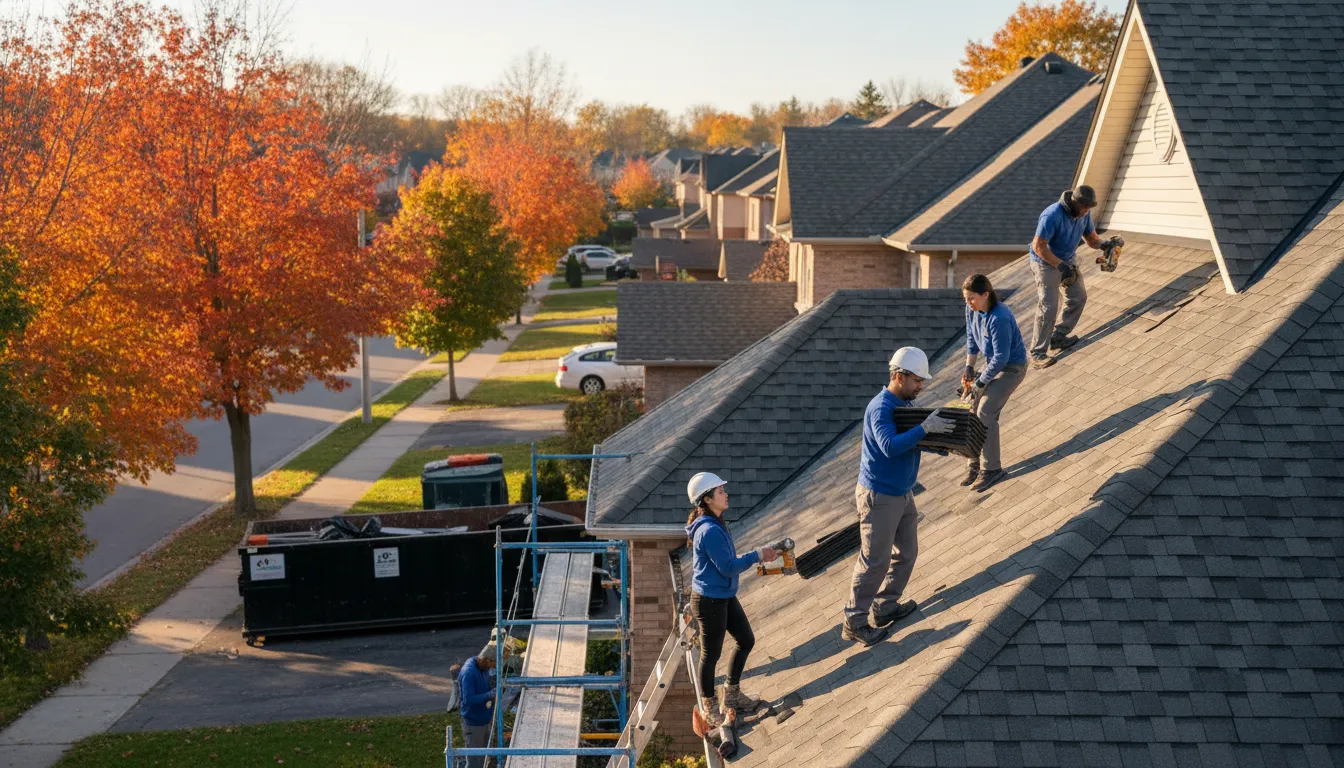
Roof replacement in Toronto
Toronto’s housing stock — ranging from Victorian rowhouses in Cabbagetown to post-war bungalows in Scarborough and modern homes near the lake — puts particular demands on roof assemblies. A proper roof replacement addresses substrate failures, modern ventilation, and durable coverings suited to Toronto’s freeze-thaw winters and humid summers. All Toronto Roofers focuses on full tear-off replacements that renew the deck, underlayment, flashing and ventilation so the next generation of roofing performs reliably. Below are the core areas we cover and why acting at the right time protects the long-term value of your home.
What a full roof replacement covers
A full roof replacement is a complete tear-off to the decking followed by inspection and repair or replacement of roof sheathing, installation of an ice-and-water shield at eaves and valleys, a synthetic high-temperature underlayment, properly sized ridge and soffit vents, new flashings at chimneys and vents, and the finished covering — asphalt architectural shingles, metal panels, or clay/ concrete tile. We also replace deteriorated fascia, repair drip edge, and inspect attic insulation and ventilation paths as part of the scope.
When you need replacement now versus a repair
Choose replacement now if the decking is rotted, there is widespread shingle granule loss, multiple leaks, or if the roof has failed more than one shingle area. Minor curling shingles, a single isolated leak, or a localized flashing failure can sometimes be repaired; in these cases a targeted repair can be more cost-effective and delay a full replacement. Our assessment distinguishes cosmetic wear from structural breakdown so you get the right intervention for the long term.
Why early replacement saves money
Replacing a roof before decking rot and attic moisture damage propagate keeps costs predictable and avoids secondary repairs to sheathing, insulation, ceilings and mould remediation. Early action preserves the substrate, reduces waste by limiting the need for extensive deck replacement, and lets you select a durable finish best matched to your budget and architectural style. In Toronto’s variable climate, deferred replacement often multiplies downstream maintenance costs.
Why Toronto’s conditions matter
Toronto’s climate includes cold winters with ice formation at eaves, warm humid summers and spring freeze-thaw cycles that stress flashings and nails. Many neighbourhoods sit on century-old lot patterns—The Annex, Rosedale—where roof pitches, dormers and chimneys create complex flashing details that require experienced workmanship. Local building codes and common Toronto practices around ventilation and ice protection mean assemblies must be built to perform specifically for this region.
Signs You Need Roof replacement in Toronto
Not every issue needs a full roof replacement, but repeated or widespread symptoms usually point to systemic failure. If you see these signs, plan for a professional assessment and written scope for replacement.
Widespread shingle granule loss
Loss of granules in gutters or heavy granule bald spots on slopes mean the weather-resistant surface is gone and the shingles are losing UV and moisture protection. Beneath the granule loss the asphalt binder weathers faster, shortening the remaining service life and often exposing the felt or synthetic underlayment.
Multiple or recurring leaks
Leaks that recur after patching often indicate failing flashings, open seams at valleys, or rotted decking beneath the covering rather than a single tile or shingle fault. Water migration in attics can mask the true entry point, so a full inspection during a tear-off determines the extent of hidden damage.
Sagging roof deck or soft spots
A visibly sagging roofline or soft spots underfoot in the attic are classic signs of structural decking failure and require immediate replacement of sheathing and possibly rafters. This symptom means the substrate has been moisture-compromised and repairs must address the structure, not just the covering.
Cracked, broken, or missing tiles
Clay or concrete tiles that are cracked or absent leave flashings and underlayment exposed to driving rain and freeze cycles, which accelerates substrate decay. Tile assemblies also rely on proper underlayment and battens; widespread tile failure typically warrants a full system renewal.
Rusting or loose metal panels
Metal roofs with corrosion around fasteners or panels that have lifted due to wind exposure can allow water entry at seams and fastener penetrations. Metal systems need secure attachment, sealants at overlaps, and occasionally replacement of panels to restore integrity.
Ice dams and eave leakage
Persistent ice dams indicate inadequate eave-to-ridge ventilation or insufficient insulation which melts attic snowpack and refreezes at eaves; repeated ice dam damage destroys shingle edges and flashings. Addressing ventilation and adding an ice-and-water shield during replacement prevents recurring eave leaks.
Curling or blistering shingles
Curling shingles point to fatigue from heat, freeze-thaw cycles, or inadequate substrate; blistering reflects trapped moisture or poor ventilation. When these issues are extensive across slopes, shingle replacement alone is temporary — a full replacement corrects the underlying assemblies.
Aging roof near end of expected life
If a roof has reached the typical service life for its material and shows multiple distress signals, replacement is the responsible choice to avoid sudden failures. Material types have different lifespans, and replacement lets you select a longer-lived covering suited to your Toronto property.
Weather is hard on your roof — email us for a same-day inspection.
Fall roofing conditions in Toronto, ON
Fall is the critical prep window around Toronto, ON: clear gutters, reseal flashing, and fix loose shingles before freeze-thaw and snow load arrive.
Proudly Serving Toronto, ON
Local, on-time service throughout Toronto and the surrounding area.